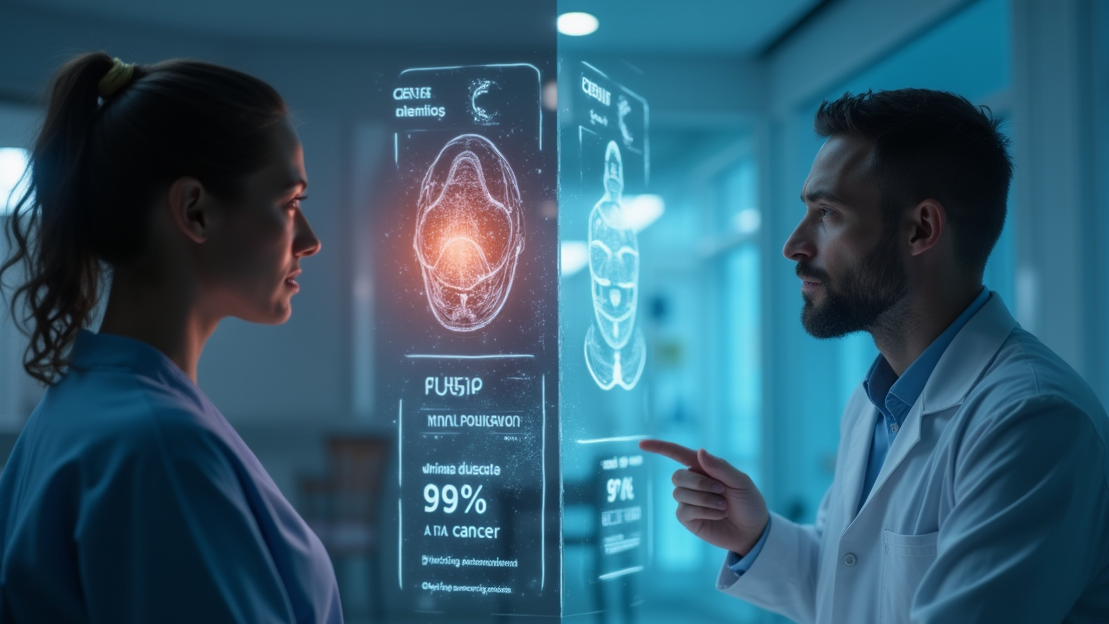
A Diagnosis That Shook the Medical World
In 2023, a 34-year-old woman in Germany visited 17 specialists over five years for chronic pain and fatigue. None could pinpoint the cause. Then, an experimental AI system scanned her medical history and genetic data – identifying Ehlers-Danlos syndrome, a rare connective tissue disorder.
The twist? She refused treatment until a human doctor confirmed the diagnosis.
This paradox encapsulates modern medicine’s dilemma: AI now surpasses doctors in diagnostic accuracy across multiple specialties, yet patients – and even physicians – resist trusting it.
By the Numbers: AI’s Undeniable Edge
Recent studies reveal AI’s growing dominance:
- 92% accuracy in detecting lung cancer from CT scans (vs. 82% for radiologists) – JAMA Oncology 2024
- 30% fewer missed fractures in emergency room X-rays when AI assists – New England Journal of Medicine
- 72% differential diagnosis accuracy for ChatGPT-4 vs. 38% for WebMD’s symptom checker in controlled trials
Yet a Mayo Clinic survey found 68% of patients distrust AI diagnoses, even when informed of their superior performance.
The Psychology of Distrust
Three cognitive biases explain our resistance:
- The “White Coat Effect”
- Patients perceive human doctors as more empathetic, even when objectively less accurate
- MIT study: 83% prefer a compassionate but incorrect doctor over a cold but precise AI
- The Black Box Phobia
- AI’s decision-making process feels opaque compared to a doctor’s explainable reasoning
- Ironically, studies show physicians often can’t explain their own diagnostic logic either
- The Perfection Paradox
- We forgive human errors (“Doctors are overworked”) but view AI mistakes as system failures
- Example: Patients accept 12% misdiagnosis rates from dermatologists but panic over a 3% AI error rate
ChatGPT vs. WebMD: A Reality Check
The viral popularity of self-diagnosis tools makes this comparison crucial:
| Metric | ChatGPT-4 (Medical Mode) | WebMD Symptom Checker |
|---|---|---|
| Accuracy | 72% (per NEJM) | 38% (Harvard study) |
| Rare Disease Detection | 61% | 12% |
| Explanation Depth | Lists reasoning with studies | Basic symptom matching |
Yet WebMD remains 20x more trusted in patient surveys. Why? Familiarity breeds comfort – even with inferior tools.
The Road Ahead
Hospitals are navigating this tension:
- Cleveland Clinic now requires AI to “consult” with doctors before final diagnoses
- Stanford’s hybrid model lets patients choose AI-only, doctor-only, or combined opinions
- AMA guidelines mandate disclosure when AI contributes to diagnoses
The irony? We trust AI to drive cars (which kill 40,000 Americans yearly) but not to read an X-ray (where errors cause <500 deaths).
Your Turn
Would you accept an AI’s diagnosis if:
✅ It caught something doctors missed?
❌ It contradicted your physician’s opinion?
Vote in our poll and join the conversation below. Tomorrow: How racial bias infects medical AI – and what hospitals aren’t telling you.
(Series continues with Article 2: “The Hidden Biases in Your AI Doctor”)